Caffeine Gummies for Focus and Productivity: A Guide
October 16, 2026 · 13 min read
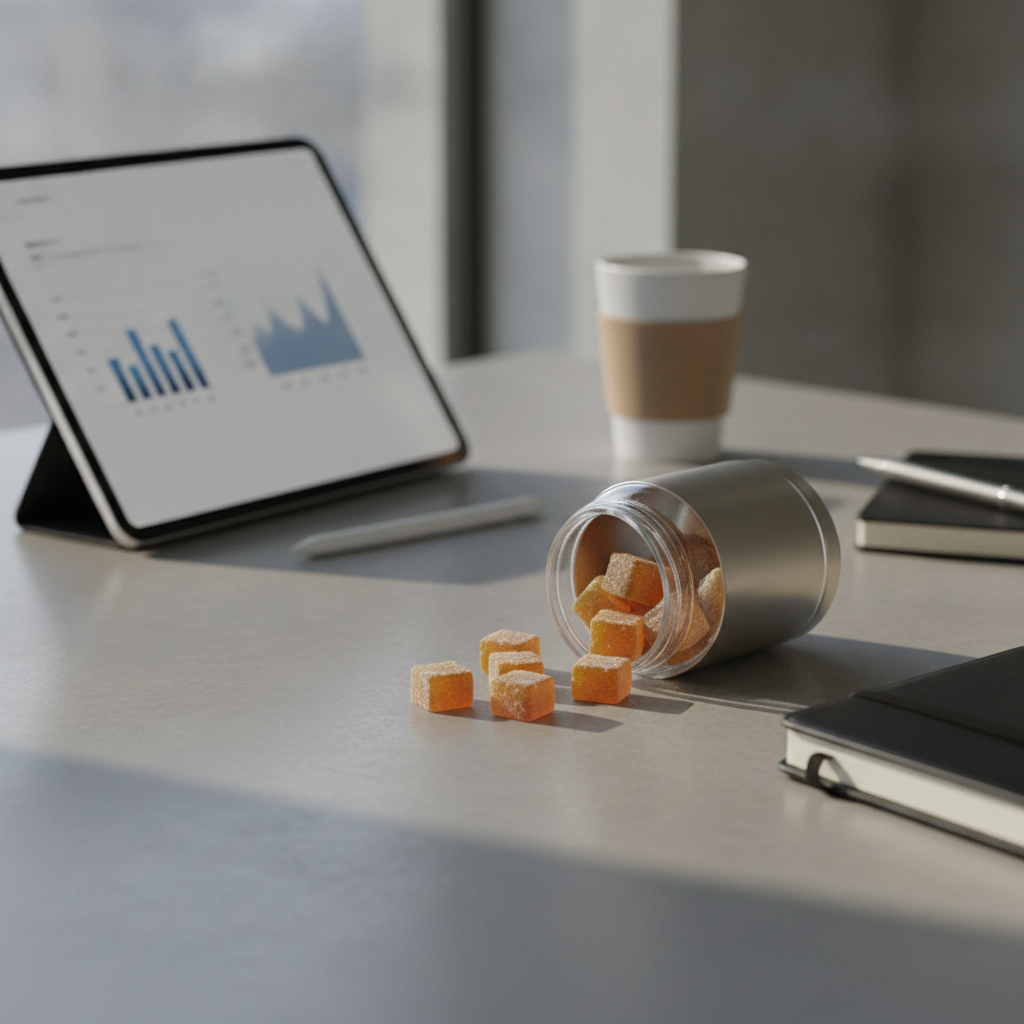
Caffeine gummies for focus and productivity have quietly become one of the fastest-growing formats in the energy and wellness aisle, and the appeal is easy to understand: no brewing, no water, no waiting — just a measured dose of caffeine you can chew between meetings, before a workout, or during a long commute. At SpeedLabs, we think the category deserves a more honest conversation than most marketing provides. This guide looks at what the science actually supports, how caffeine gummies for focus and productivity compare to coffee, pills, and energy drinks, and how to use them in a way that supports alertness without setting you up for an afternoon crash.
TL;DR — The Bottom Line
Caffeine gummies for focus and productivity deliver a pre-measured dose of caffeine in a portable, chewable format, making them convenient for commutes, workdays, and workouts. They are not proven to work faster or "crash-free" compared to coffee or capsules — onset depends on dose, formulation, and individual metabolism. For most healthy adults, staying within 400 mg of total daily caffeine and avoiding single doses above 200 mg keeps intake within ranges considered low-risk by major health authorities. The smartest approach is choosing a transparently labeled product, tracking total caffeine from all sources, and timing gummies to avoid sleep disruption.
Quick Facts
- Daily caffeine benchmark: Up to 400 mg/day is generally not associated with negative effects in healthy adults, per the FDA.
- Single-dose benchmark: EFSA identifies single doses up to 200 mg as generally low-risk for healthy adults.
- Sleep-sensitive dose: Doses around 100 mg can affect sleep in some adults, especially near bedtime.
- Market growth: Global caffeine gummy market estimates range from roughly $126M to $580M in 2025, with projected growth of 12%–14% CAGR through the early 2030s.
- Channel mix: Online retail is estimated to represent over half of 2025 category revenue.
Caffeine Gummies for Focus and Productivity: What They Are and Why They're Growing
Caffeine gummies for focus and productivity are chewable supplements that deliver a set amount of caffeine — typically somewhere between 40 mg and 100 mg per serving — without the need for brewing equipment, hot water, or refrigeration. They sit in the same broader category as energy gum and portable caffeine chews, but gummies tend to prioritize taste, texture, and ease of dosing over speed of absorption claims.
The category's growth is being driven by a shift in how people think about energy products. Instead of treating caffeine purely as a workout or late-night study aid, more consumers are reaching for caffeine gummies for focus and productivity during ordinary workdays — in back-to-back meetings, during long drives, or while traveling across time zones. Market estimates vary widely depending on methodology, but most point toward a double-digit annual growth rate over the next several years, reflecting real demand rather than a short-lived trend.

How Caffeine Gummies for Focus and Productivity Work in the Body
Caffeine is one of the most studied stimulants in the world, and its core mechanism is well established: it blocks adenosine receptors in the brain, which reduces the perception of fatigue and increases alertness. What's less settled is how that mechanism plays out specifically in gummy form. Unlike coffee or capsules, the evidence base for caffeine gummies themselves is still developing, and onset time can vary based on the dose, whether the gummy is chewed thoroughly, what else is in your stomach, and your personal caffeine tolerance.
Not necessarily. Absorption depends on formulation, chewing, stomach contents, and individual metabolism. Some people may feel effects within 15–30 minutes, similar to other oral caffeine formats, but there is no guarantee of a faster or more predictable onset than coffee or capsules.
It's worth being precise about what caffeine gummies for focus and productivity can and cannot promise. They can deliver a consistent, pre-measured dose — which is genuinely useful for people who want to avoid guessing how much caffeine is in a cup of coffee. What they cannot responsibly promise is a guaranteed crash-free experience or instant cognitive enhancement. Those claims outpace the current evidence, and SpeedLabs avoids making them.
Caffeine Gummies for Focus and Productivity vs. Coffee, Pills, and Energy Drinks
Each caffeine delivery format has tradeoffs. Coffee offers ritual and flexibility but requires preparation and varies in caffeine content by roast, brew method, and cup size. Energy drinks deliver caffeine alongside sugar or artificial sweeteners and often larger volumes of liquid. Capsules offer precise dosing but lack portability advantages like chewability and no-water consumption. Caffeine gummies for focus and productivity attempt to combine the precision of capsules with the convenience of a snack-like format.
| Format | Typical Caffeine Range | Preparation Needed | Best Use Case |
|---|---|---|---|
| Coffee | 80–165 mg per 8 oz cup | Brewing required | Home or office routine |
| Caffeine capsules | 100–200 mg per capsule | None, but needs water | Precise, infrequent dosing |
| Energy drinks | 80–300 mg per can | None | On-the-go, larger serving |
| Caffeine gummies for focus and productivity | 40–100 mg per serving | None, no water needed | Commutes, workdays, travel |

The biggest practical advantage of caffeine gummies for focus and productivity is portability combined with serving consistency. A commuter who can't brew coffee on a train, or a professional heading into back-to-back meetings, can take a known dose without equipment. That said, the format itself does not change caffeine's underlying physiology — the same dosing principles that apply to coffee or capsules apply here.
Safe Dosing: How Much Caffeine Should Be in Your Gummies?
Dosing is the single most important factor in using caffeine gummies for focus and productivity responsibly. The FDA cites up to 400 mg of caffeine per day as an amount not generally associated with negative effects in most healthy adults — roughly equivalent to two to three 12-ounce cups of coffee. The European Food Safety Authority (EFSA) similarly identifies single doses up to 200 mg, and total daily intake up to 400 mg, as generally without safety concern for healthy adults, excluding populations such as pregnant women.
Most products on the market range from 40 mg to 100 mg of caffeine per serving. Always check the label, since products marketed for sports or high-intensity use may contain more.
One detail that's easy to overlook: caffeine from gummies stacks with caffeine from every other source in your day. Coffee, tea, pre-workout powders, some medications, and even chocolate all contribute to your total intake. If you're using caffeine gummies for focus and productivity alongside your regular coffee habit, track the combined total rather than treating the gummy as a separate, isolated dose. Research also indicates that doses around 100 mg can affect sleep in some adults, particularly when taken within several hours of bedtime, so timing matters as much as quantity.
What to Look for When Choosing Caffeine Gummies for Focus and Productivity
Not all products in this category are formulated or labeled the same way. Because the caffeine-gummy market is still fragmented — with market research identifying dozens of brands and hundreds of marketplace sellers — label transparency and formulation clarity matter more than flashy claims.
- Exact caffeine dose per serving: Look for a specific milligram amount, not a vague "energy blend."
- Supporting ingredients: L-theanine is commonly paired with caffeine for a smoother subjective experience, though it should not be marketed as eliminating a crash entirely.
- Serving size guidance: Clear instructions on how many gummies constitute a full serving and a sensible daily maximum.
- Sugar content: Sugar-free formulations are gaining share, estimated at over a third of the market in 2025, appealing to consumers managing overall sugar intake.
- Third-party testing or manufacturing transparency: Brands that disclose where and how products are made tend to be more trustworthy for daily use.
SpeedLabs approaches formulation with this transparency in mind, favoring clearly labeled doses and straightforward ingredient lists over blends that obscure how much caffeine you're actually consuming. If you're exploring options, our product lineup is built around that same principle: know exactly what you're taking before you take it.
Using Caffeine Gummies for Focus and Productivity Without the Afternoon Crash
A "crash" typically happens when caffeine wears off faster than expected, often made worse by high doses, inadequate hydration, or poor sleep the night before. While no format can guarantee a crash-free experience, there are practical habits that reduce the odds of one when using caffeine gummies for focus and productivity.
- Start with the lowest effective dose. If you're new to the format, try a 40–50 mg serving before moving to higher doses.
- Time your dose around your actual need. Taking a gummy an hour before a demanding task, rather than the moment you feel tired, allows for more predictable timing.
- Track your total daily caffeine. Add up coffee, tea, gummies, and any other caffeinated products to stay within the 400 mg general guideline.
- Avoid caffeine gummies for focus and productivity within 6 hours of bedtime. Doses as low as 100 mg have been shown to affect sleep in some adults when taken late in the day.
- Pair with water and food. Caffeine on an empty stomach can intensify jitteriness for some people; pairing intake with a meal or snack can smooth the experience.
These habits won't eliminate individual variability — some people are simply more sensitive to caffeine than others — but they reduce the likelihood of the sharp peaks and drops that give caffeine its reputation for crashes. Used this way, caffeine gummies for focus and productivity can function as one tool among several for managing energy through a demanding day, rather than a substitute for sleep and rest.
Who Should Be Cautious With Caffeine Gummies for Focus and Productivity?
Caffeine gummies for focus and productivity are not appropriate for everyone. Pregnant individuals, people with certain heart conditions, those sensitive to stimulants, and anyone taking medications that interact with caffeine should consult a healthcare provider before use. Adolescents and anyone already consuming caffeine from multiple sources should also be cautious about stacking an additional dose on top of an already high daily intake.
It's also worth repeating: caffeine gummies for focus and productivity are a tool for managing alertness, not a replacement for adequate sleep. Caffeine masks the perception of fatigue; it does not resolve the underlying sleep debt. For sustainable productivity, the gummy should support a workday that is otherwise built on reasonable rest, not substitute for it.
Frequently Asked Questions
Do caffeine gummies for focus and productivity actually improve focus?
Caffeine is well established as a stimulant that can reduce perceived fatigue and increase alertness, which can indirectly support focus. However, evidence specific to gummies as a format is still developing, and individual response varies based on dose, tolerance, and sleep status.
How many caffeine gummies can I safely take per day?
This depends entirely on the milligram dose per gummy and your total daily caffeine intake from all sources. Most health authorities, including the FDA, point to roughly 400 mg per day as a general benchmark for healthy adults, with single doses ideally not exceeding 200 mg.
Are caffeine gummies for focus and productivity better than coffee?
Neither format is inherently better; they offer different tradeoffs. Coffee provides flexibility and ritual, while caffeine gummies for focus and productivity offer precise, pre-measured dosing without brewing or water, which can be more convenient during commutes, meetings, or travel.
Can caffeine gummies cause a crash later in the day?
They can, similar to other caffeine formats, particularly at higher doses or when taken on an empty stomach or with inadequate sleep. Starting with a lower dose and timing intake thoughtfully can reduce the likelihood of a sharp drop in energy.
Will caffeine gummies affect my sleep?
Possibly. Research suggests doses around 100 mg can affect sleep in some adults, especially when consumed within several hours of bedtime. Avoiding caffeine gummies for focus and productivity in the late afternoon or evening is a reasonable precaution.
Final Thoughts on Caffeine Gummies for Focus and Productivity
Caffeine gummies for focus and productivity represent a genuinely useful evolution in how people manage energy during busy days — not because the format changes what caffeine does in the body, but because it makes dosing more consistent and consumption more convenient. The brands that will earn long-term trust in this category are the ones that are upfront about dosing, avoid overstating benefits, and help consumers understand how to fit caffeine responsibly into their total daily intake.
At SpeedLabs, that's the approach we've built our products around: clear labeling, sensible serving sizes, and no promises we can't back up with evidence. If you're ready to explore a more transparent approach to portable energy, visit SpeedLabs to see how our formulations are designed around precision, not hype.